 IST,
IST,





Speeches & Media Interactions
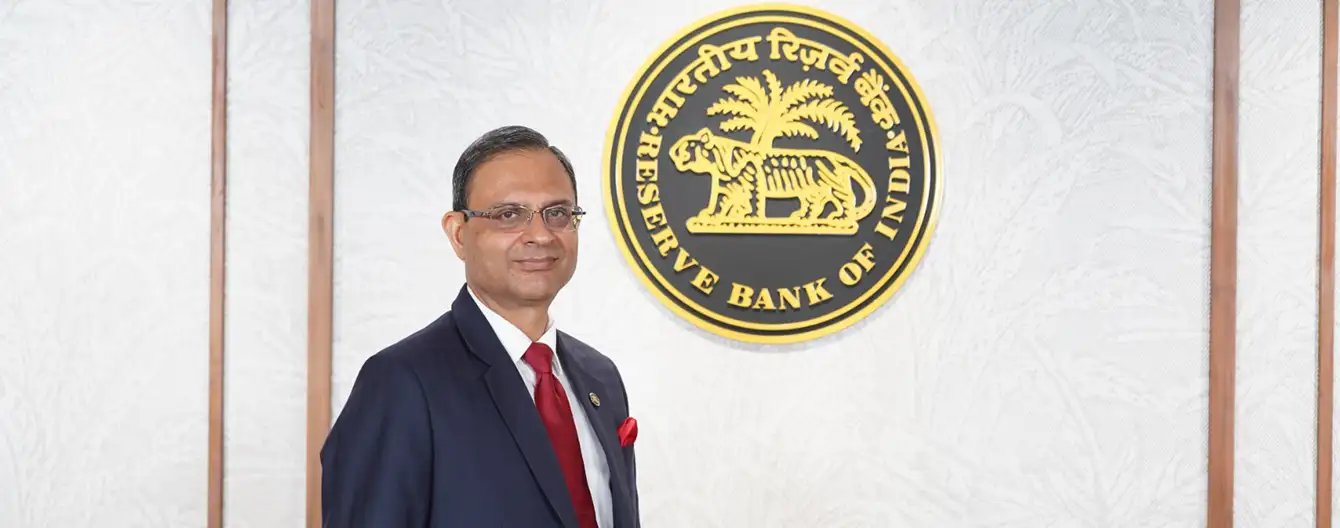

Monetary Policy Statement by RBI Governor- February 06, 2026


Speeches


I am delighted to be here to inaugurate the second edition of the global conference on financial resilience organised by the College of Supervisors (CoS) of the Reserve Bank of India. The first edition of the conference was held last year in April and I had participated in the same. Since its establishment in the year 2020, the CoS has made significant contributions to strengthen supervisory capacity of not just the Reserve Bank, but also the supervisors from a few other countries who have participated in the various programmes organised by the college. My compliments to the Team CoS for their dedication in successfully carrying forward the objectives of the organisation.
I am delighted to be here to inaugurate the second edition of the global conference on financial resilience organised by the College of Supervisors (CoS) of the Reserve Bank of India. The first edition of the conference was held last year in April and I had participated in the same. Since its establishment in the year 2020, the CoS has made significant contributions to strengthen supervisory capacity of not just the Reserve Bank, but also the supervisors from a few other countries who have participated in the various programmes organised by the college. My compliments to the Team CoS for their dedication in successfully carrying forward the objectives of the organisation.
 PDF (
PDF (I am deeply honoured to participate in the 79th meeting of the Executive Council (EXCO) of the International Association of Deposit Insurers (IADI). At the outset, I would like to express my profound appreciation for the IADI as a global standard-setter as well as an international forum for the cross-fertilisation of information and country experiences on practices and techniques relating to deposit insurance. The IADI is contributing significantly to building effective deposit insurance systems across the world, thereby strengthening public confidence in the banking system and ensuring financial stability.
I am deeply honoured to participate in the 79th meeting of the Executive Council (EXCO) of the International Association of Deposit Insurers (IADI). At the outset, I would like to express my profound appreciation for the IADI as a global standard-setter as well as an international forum for the cross-fertilisation of information and country experiences on practices and techniques relating to deposit insurance. The IADI is contributing significantly to building effective deposit insurance systems across the world, thereby strengthening public confidence in the banking system and ensuring financial stability.
Deputy Governor Shri Swaminathan, Executive Directors, Chairmen of the Board and ACB of ARCs, MDs & CEOs of ARCs, my colleagues from RBI, ladies and gentlemen,
I am happy to be amidst you today to talk about the crucial topic of governance in ARCs. But before I address the issue of governance, let me briefly discuss the importance of credit risk management and the critical role envisaged for ARCs – both in terms of legislative intent and regulatory expectations, in India’s financial landscape.
Role of ARCs in the Stressed Asset Management
We all know that books of our financial institutions are largely susceptible to credit risk as loans and advances constitute a large proportion of the asset portfolio. The credit risk weighted assets (credit RWAs), in fact, constitute around 80 per cent of total RWAs of the banking system. Therefore, any prudential regulation to safeguard the stability of financial system must remain alive to the credit risk in the books of financial entities, banks and non-banks alike.
Deputy Governor Shri Swaminathan, Executive Directors, Chairmen of the Board and ACB of ARCs, MDs & CEOs of ARCs, my colleagues from RBI, ladies and gentlemen,
I am happy to be amidst you today to talk about the crucial topic of governance in ARCs. But before I address the issue of governance, let me briefly discuss the importance of credit risk management and the critical role envisaged for ARCs – both in terms of legislative intent and regulatory expectations, in India’s financial landscape.
Role of ARCs in the Stressed Asset Management
We all know that books of our financial institutions are largely susceptible to credit risk as loans and advances constitute a large proportion of the asset portfolio. The credit risk weighted assets (credit RWAs), in fact, constitute around 80 per cent of total RWAs of the banking system. Therefore, any prudential regulation to safeguard the stability of financial system must remain alive to the credit risk in the books of financial entities, banks and non-banks alike.
Good Evening,
It is indeed a pleasure to be here amidst this distinguished gathering. The theme of the summit, ‘Rise of the Indian Spring’, is both contextual and inspiring, reflecting not just the rising trajectory and profile of the Indian economy, but also the sentiments prevailing within the country and across the world.
Good Evening,
It is indeed a pleasure to be here amidst this distinguished gathering. The theme of the summit, ‘Rise of the Indian Spring’, is both contextual and inspiring, reflecting not just the rising trajectory and profile of the Indian economy, but also the sentiments prevailing within the country and across the world.
As Reserve Bank of India enters its 90th year today, April 1, 2024, it’s time to reflect upon its journey through the multitude of overlapping shocks over the last few years. The pandemic, followed by continuing geopolitical crises in several parts of the world tested the resilience of every economy, including that of India. Nevertheless, it is satisfying to note that, as a country, we’ve navigated through this period of ‘great volatility’ remarkably well.
As Reserve Bank of India enters its 90th year today, April 1, 2024, it’s time to reflect upon its journey through the multitude of overlapping shocks over the last few years. The pandemic, followed by continuing geopolitical crises in several parts of the world tested the resilience of every economy, including that of India. Nevertheless, it is satisfying to note that, as a country, we’ve navigated through this period of ‘great volatility’ remarkably well.
I am honoured to be invited to Nomura’s 40th Central Bankers Seminar. The discussions here assume topical relevance in the context of the tectonic shifts underway in the global economy that present new challenges for the conduct of central banking. Besides divergent growth pathways and the varying speeds and magnitudes of disinflation, regime shifts impart their own layers of uncertainty.
I am honoured to be invited to Nomura’s 40th Central Bankers Seminar. The discussions here assume topical relevance in the context of the tectonic shifts underway in the global economy that present new challenges for the conduct of central banking. Besides divergent growth pathways and the varying speeds and magnitudes of disinflation, regime shifts impart their own layers of uncertainty.
We are holding this conference of the Reserve Bank of India Ombudsmen on a very important day, namely, the World Consumer Day. This event underscores our unwavering dedication to the well-being of the consumer in the financial sector. As custodians of the financial system – whether as a regulator or regulated entities such as banks, NBFCs or other financial institutions – our success hinges not only on promoting the resilience of the system, but also significantly on the value we bring to the lives of our citizens, who form the core of the financial ecosystem. Protection of consumer interest is one of the core guiding principles of the Reserve Bank’s policies and actions. I take it that similar is the case with the regulated entities of the Reserve Bank also.
We are holding this conference of the Reserve Bank of India Ombudsmen on a very important day, namely, the World Consumer Day. This event underscores our unwavering dedication to the well-being of the consumer in the financial sector. As custodians of the financial system – whether as a regulator or regulated entities such as banks, NBFCs or other financial institutions – our success hinges not only on promoting the resilience of the system, but also significantly on the value we bring to the lives of our citizens, who form the core of the financial ecosystem. Protection of consumer interest is one of the core guiding principles of the Reserve Bank’s policies and actions. I take it that similar is the case with the regulated entities of the Reserve Bank also.
Dr. P.G. Sankaran, Vice Chancellor, CUSAT; Dr. Jagathy Raj, Director, School of Management Studies; faculty members, students, ladies, and gentlemen, At the outset, let me thank Dr. Jagathy Raj for inviting to deliver this memorial lecture in the memory of Dr. M.V. Pylee. I cherish this gesture from my alma mater to deliver this talk and it is indeed an honour and privilege to do so. Padma Bhushan Dr. M. V. Pylee was a distinguished figure in the field of management and administration who enriched the field of management education in not only Kerala but across the country with his scholarly work. He made significant contributions to the society through his thought leadership and academic endeavour and with his enduring legacy. Dr. Pylee's leadership as a Management Guru and as the Director of the School of Management Studies, CUSAT, contributed significantly to the development of management education in Kerala. His vision and guidance helped establish several institutions as centers of excellence in management studies. Unfortunately, I did not have an opportunity to directly interact with Dr. Pylee as he demitted office of Director before I joined SMS, but I have benefitted from his ideals and vision, having completed my MBA from SMS in the year 1982.
Dr. P.G. Sankaran, Vice Chancellor, CUSAT; Dr. Jagathy Raj, Director, School of Management Studies; faculty members, students, ladies, and gentlemen, At the outset, let me thank Dr. Jagathy Raj for inviting to deliver this memorial lecture in the memory of Dr. M.V. Pylee. I cherish this gesture from my alma mater to deliver this talk and it is indeed an honour and privilege to do so. Padma Bhushan Dr. M. V. Pylee was a distinguished figure in the field of management and administration who enriched the field of management education in not only Kerala but across the country with his scholarly work. He made significant contributions to the society through his thought leadership and academic endeavour and with his enduring legacy. Dr. Pylee's leadership as a Management Guru and as the Director of the School of Management Studies, CUSAT, contributed significantly to the development of management education in Kerala. His vision and guidance helped establish several institutions as centers of excellence in management studies. Unfortunately, I did not have an opportunity to directly interact with Dr. Pylee as he demitted office of Director before I joined SMS, but I have benefitted from his ideals and vision, having completed my MBA from SMS in the year 1982.
Honourable Governors, Deputy Governors, Managing Directors, delegations from SEACEN central banks, distinguished experts, and panellists, Dr. Mangal Goswami and the SEACEN team, and my colleagues from the Reserve Bank of India.
Honourable Governors, Deputy Governors, Managing Directors, delegations from SEACEN central banks, distinguished experts, and panellists, Dr. Mangal Goswami and the SEACEN team, and my colleagues from the Reserve Bank of India.
Install the RBI mobile application and get quick access to the latest news!
Scan the QR code to install our app



Page Last Updated on: February 24, 2026


