 IST,
IST,



Search


errorSearch


Page
Official Website of Reserve Bank of India

Speeches & Media Interactions
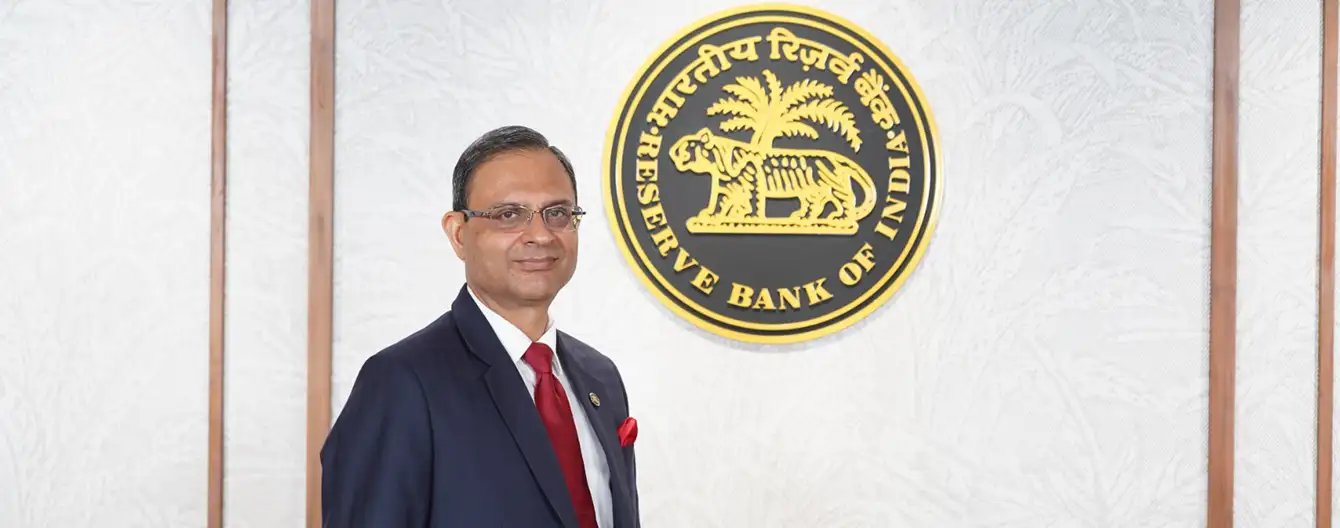

Monetary Policy Statement by RBI Governor- February 06, 2026


Speeches


Jan 07,
2003
Management Challenges in Banking*
IntroductionIt gives me great pleasure in participating in the Annual Day function of NIBM where I have spent two years as a student of BMP in 1980s. NIBM has been playing a vital role in providing a platform to bankers and at times to Regulators also for exchange of views and thoughts to meet the emerging requirements of banking sector. Recent developments have underscored the urgency to sensitise the banking industry on emerging issues and quickly adapt to the chang
Shri. G.P. Muniappan,
Deputy Governor, Reserve Bank of India
IntroductionIt gives me great pleasure in participating in the Annual Day function of NIBM where I have spent two years as a student of BMP in 1980s. NIBM has been playing a vital role in providing a platform to bankers and at times to Regulators also for exchange of views and thoughts to meet the emerging requirements of banking sector. Recent developments have underscored the urgency to sensitise the banking industry on emerging issues and quickly adapt to the chang
 PDF (
PDF (
Dec 29,
2002
Transforming Indian Banking: In Search of a Better Tomorrow
The significant transformation of the banking industry in India is clearly evident from the changes that have occurred in the financial markets, institutions and products. While deregulation has opened up new vistas for banks to augment revenues, it has entailed greater competition and consequently greater risks. Cross-border flows and entry of new products, particularly derivative instruments, have impacted significantly on the domestic banking sector, forcing banks
Dr. Rakesh Mohan,
Deputy Governor, Reserve Bank of India
The significant transformation of the banking industry in India is clearly evident from the changes that have occurred in the financial markets, institutions and products. While deregulation has opened up new vistas for banks to augment revenues, it has entailed greater competition and consequently greater risks. Cross-border flows and entry of new products, particularly derivative instruments, have impacted significantly on the domestic banking sector, forcing banks
Dec 28,
2002
Inaugural Session on Technical Session I - Reorienting Structure
Introduction It gives me great pleasure to address this gathering of professionals from the financial sector. I have been impressed by the arrangements which have been made for the conduct of the program, and hope that the proceedings will also match the organisation in grandeur. I have had the opportunity to go through the papers which are being presented at this session and I am very happy to note that they are of a high quality and raise very pertinent issues. In f
Shri. G.P. Muniappan,
Deputy Governor, Reserve Bank of India
Introduction It gives me great pleasure to address this gathering of professionals from the financial sector. I have been impressed by the arrangements which have been made for the conduct of the program, and hope that the proceedings will also match the organisation in grandeur. I have had the opportunity to go through the papers which are being presented at this session and I am very happy to note that they are of a high quality and raise very pertinent issues. In f
Dec 28,
2002
Re-Engineering Operations in Banking System
Banking has traditionally remained a protected industry in many emerging economies. However, a combination of developments has compelled banks to change the old ways of doing business. These include, among others, technological advancements, disintermediation pressures arising from a liberalized marketplace, increased emphasis on shareholders’ value and macroeconomic pressures and banking crises in 1990s. As a consequence of these developments, the dividing line betwe
Shri Vepa Kamesam,
Deputy Governor, Reserve Bank of India
Banking has traditionally remained a protected industry in many emerging economies. However, a combination of developments has compelled banks to change the old ways of doing business. These include, among others, technological advancements, disintermediation pressures arising from a liberalized marketplace, increased emphasis on shareholders’ value and macroeconomic pressures and banking crises in 1990s. As a consequence of these developments, the dividing line betwe
Dec 27,
2002
Strengthening Indian Banking and Finance: Progress and Prospects
The Bank Economists’ Conference has become an important annual event for constructive interactions and informed debate on the state of our financial system. The theme chosen for this year, "Indian Banking: Managing Transformation", provides an excellent opportunity to reflect on the ground that has been covered in transforming Indian banking into a vibrant, sound and a well-functioning system, and to chart out a plan for the future. I am happy to be here with you agai
Dr. Bimal Jalan,
Governor, Reserve Bank of India
The Bank Economists’ Conference has become an important annual event for constructive interactions and informed debate on the state of our financial system. The theme chosen for this year, "Indian Banking: Managing Transformation", provides an excellent opportunity to reflect on the ground that has been covered in transforming Indian banking into a vibrant, sound and a well-functioning system, and to chart out a plan for the future. I am happy to be here with you agai
Oct 29,
2002
Distribution of Notes and Coins in India
Presentation (Powerpoint) by Shri Vepa Kamesam at Currency Conference 2002, Honolulu, Hawaii
Shri Vepa Kamesam,
Deputy Governor, Reserve Bank of India
Presentation (Powerpoint) by Shri Vepa Kamesam at Currency Conference 2002, Honolulu, Hawaii
Oct 18,
2002
Development of Bond Market in India
IntroductionBond markets link issuers, i.e., governments, state owned institutions, local bodies and corporates having financing needs, with investors having investible surplus. An efficient bond market is one where the requirements of both issuers and investors are met effectively at a price (interest rates) determined competitively, and where price adjustment to new information is seamless. For this purpose, the basic pre-requisites are: stable macro-economic enviro
Shri Mohammad Tahir,
Executive Director, Reserve Bank of India
IntroductionBond markets link issuers, i.e., governments, state owned institutions, local bodies and corporates having financing needs, with investors having investible surplus. An efficient bond market is one where the requirements of both issuers and investors are met effectively at a price (interest rates) determined competitively, and where price adjustment to new information is seamless. For this purpose, the basic pre-requisites are: stable macro-economic enviro
Sep 28,
2002
Key Note Address at the Assembly of the Forex Dealers' Association of India at Bangalore on September 28, 2002 delivered by Smt K.J.Udeshi, Executive Director, RBI
Mr.Pravin Gupta, Chairman, Forex Association of India, Mr Tyagarajan, General Secretary, other dignitaries present here, ladies and gentlemen,It is indeed a great pleasure to be amidst you all this evening. This is my first participation in the Forex Assembly. The first thing however that came to my mind when Mr Gupta approached me is that, thankfully there could not be a more opportune time for my first visit when all is apparently well with the forex market world an
Smt. K.J. Udeshi,
Executive Director, Reserve Bank of India
Mr.Pravin Gupta, Chairman, Forex Association of India, Mr Tyagarajan, General Secretary, other dignitaries present here, ladies and gentlemen,It is indeed a great pleasure to be amidst you all this evening. This is my first participation in the Forex Assembly. The first thing however that came to my mind when Mr Gupta approached me is that, thankfully there could not be a more opportune time for my first visit when all is apparently well with the forex market world an
Sep 11,
2002
Governance and Regulation of Financial Services
I. Introduction to the theme and the speakersThe theme for this session is a very broad one, encompassing the entire framework of regulation. However, it is very relevant in today’s times given the focus on the regulation and supervision of the institutions in the financial sector. This focus has emerged in the context of the large number of financial sector crises and bank failures, which have plagued almost all the economies in the world over the last two decades. T
Shri. G.P. Muniappan,
Deputy Governor, Reserve Bank of India
I. Introduction to the theme and the speakersThe theme for this session is a very broad one, encompassing the entire framework of regulation. However, it is very relevant in today’s times given the focus on the regulation and supervision of the institutions in the financial sector. This focus has emerged in the context of the large number of financial sector crises and bank failures, which have plagued almost all the economies in the world over the last two decades. T
Sep 03,
2002
Managing Public Debt - Issues and Challenges
I thank the ASSOCHAM for inviting me at the Valedictory session of the Seminar on Managing Public Debt.During the course of Seminar, various aspects of Managing Public Debt have been discussed. Many suggestions have been made by the speakers. I am sure these suggestions will be sent to Government for consideration.Practically, all aspects of Debt Management have been discussed in the Seminar. I would, therefore, be supplementing to what has already been said.Role of R
Shri Mohammad Tahir,
Executive Director, Reserve Bank of India
I thank the ASSOCHAM for inviting me at the Valedictory session of the Seminar on Managing Public Debt.During the course of Seminar, various aspects of Managing Public Debt have been discussed. Many suggestions have been made by the speakers. I am sure these suggestions will be sent to Government for consideration.Practically, all aspects of Debt Management have been discussed in the Seminar. I would, therefore, be supplementing to what has already been said.Role of R
Install the RBI mobile application and get quick access to the latest news!
Scan the QR code to install our app



Page Last Updated on: March 03, 2026


