 IST,
IST,





Speeches & Media Interactions
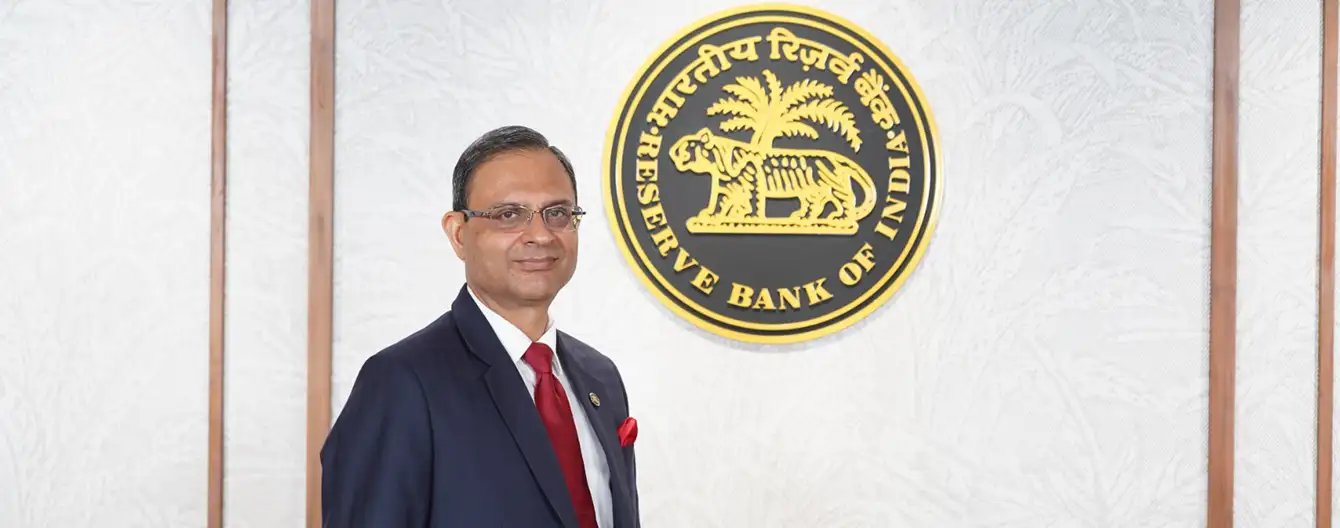

Monetary Policy Statement by RBI Governor- February 06, 2026


Speeches


It is my pleasure and honour to deliver the 14th Foundation Day Lecture of the Centre for Development Studies (CDS). Established in October 1970 by Professor K. N. Raj, CDS has been a premier academic institute in India for social science and development research. CDS's footprints in economic research have been evident through its pioneering work on human development, labour, industry, international trade, migration, decentralisation and local governance, among others.
It is my pleasure and honour to deliver the 14th Foundation Day Lecture of the Centre for Development Studies (CDS). Established in October 1970 by Professor K. N. Raj, CDS has been a premier academic institute in India for social science and development research. CDS's footprints in economic research have been evident through its pioneering work on human development, labour, industry, international trade, migration, decentralisation and local governance, among others.
Good evening. 2. The Chairman and members of the Board of Axis Bank; the MD and CEO and the senior leadership team of the Axis Bank family, the Champions being recognised today, and colleagues, ladies and gentlemen. 3. Thank you for the warm invitation. It is a pleasure to be here at Axis House this evening, and to be part of an occasion that is clearly special for the institution and its people.
Good evening. 2. The Chairman and members of the Board of Axis Bank; the MD and CEO and the senior leadership team of the Axis Bank family, the Champions being recognised today, and colleagues, ladies and gentlemen. 3. Thank you for the warm invitation. It is a pleasure to be here at Axis House this evening, and to be part of an occasion that is clearly special for the institution and its people.
Distinguished guests and my colleagues, Namaste and a very good afternoon! It is a privilege to address this illustrious gathering at College of Supervisors’ Third Annual Global Conference convened around the theme of ‘Adapting the Regulation and Supervision to the Digital Age’.
Distinguished guests and my colleagues, Namaste and a very good afternoon! It is a privilege to address this illustrious gathering at College of Supervisors’ Third Annual Global Conference convened around the theme of ‘Adapting the Regulation and Supervision to the Digital Age’.
Respected Governor; Deputy Governor, Shri S C Murmu; Chairman, Academic Council, College of Supervisors, Shri Arijit Basu; and members of the Academic Council of CoS Director, CoS, Shri R. Subramanian; Distinguished speakers, panellists and Managing Directors & CEOs of Regulated Entities; My fellow colleagues from RBI, Ladies and Gentlemen. A very good morning to all of you. It is a pleasure to be with you today at the third edition of the annual global conference of the College of Supervisors of the Reserve Bank of India.
Respected Governor; Deputy Governor, Shri S C Murmu; Chairman, Academic Council, College of Supervisors, Shri Arijit Basu; and members of the Academic Council of CoS Director, CoS, Shri R. Subramanian; Distinguished speakers, panellists and Managing Directors & CEOs of Regulated Entities; My fellow colleagues from RBI, Ladies and Gentlemen. A very good morning to all of you. It is a pleasure to be with you today at the third edition of the annual global conference of the College of Supervisors of the Reserve Bank of India.
Good morning and Namaskar. It is my privilege to address the third annual global conference of the College of Supervisors. 2. Advancement in technology is impacting all spheres of human activity – personal, business and public. Financial system is no exception. Technology has revolutionised banking over the years. Yet, today's landscape is distinct - the pace and scale of change are unprecedented. Technology has introduced new products, partners, and processes.
Good morning and Namaskar. It is my privilege to address the third annual global conference of the College of Supervisors. 2. Advancement in technology is impacting all spheres of human activity – personal, business and public. Financial system is no exception. Technology has revolutionised banking over the years. Yet, today's landscape is distinct - the pace and scale of change are unprecedented. Technology has introduced new products, partners, and processes.
I. Introduction Distinguished industry leaders, colleagues and guests. 1. It is a privilege to be able to stand here and talk to such a learned gathering and I am thankful to Mint for inviting me. 2. Money, as we know it, has been a central pillar of human society for centuries, enabling trade, facilitating economic activity, and underpinning the very notion of trust in social and financial interactions. Over time, the form of money has evolved with technology - from commodities to metal to paper to balances in deposit accounts to now, digital tokens. While the forms of money have evolved with technology, the fundamental character of money - what it represents, or what gives it credibility – has always been that it represents value that has users’ trust. That value is either intrinsic (metal money) or derived from a promise to pay (paper money or deposit money) by a trusted person. Theoretically, money can be issued by any person as long as he has the trust of the users. The more stable forms of money in history have, however, always been issued by sovereigns, not by private issuers. Examples of private money (money issued by non-sovereigns) can be found in history but they have not been stable arrangements. In practice, therefore, money has credibility because its value is promised by the sovereign. 3. This fundamental character of money is under challenge from cryptocurrencies. Not in terms of technology, as money in the form of digital tokens can exist without changing the nature of money itself. But the fundamental challenge of cryptocurrencies is that they claim to change the very nature of money – because cryptocurrencies do not represent value either in terms of intrinsic worth or in terms of promise to pay. In my talk today, I propose to explore what the nature of such challenge is, and what are the implications of cryptocurrencies for the financial system as we know it. 4. To be able to understand the nature or character of money, we need to look a little deeper.
I. Introduction Distinguished industry leaders, colleagues and guests. 1. It is a privilege to be able to stand here and talk to such a learned gathering and I am thankful to Mint for inviting me. 2. Money, as we know it, has been a central pillar of human society for centuries, enabling trade, facilitating economic activity, and underpinning the very notion of trust in social and financial interactions. Over time, the form of money has evolved with technology - from commodities to metal to paper to balances in deposit accounts to now, digital tokens. While the forms of money have evolved with technology, the fundamental character of money - what it represents, or what gives it credibility – has always been that it represents value that has users’ trust. That value is either intrinsic (metal money) or derived from a promise to pay (paper money or deposit money) by a trusted person. Theoretically, money can be issued by any person as long as he has the trust of the users. The more stable forms of money in history have, however, always been issued by sovereigns, not by private issuers. Examples of private money (money issued by non-sovereigns) can be found in history but they have not been stable arrangements. In practice, therefore, money has credibility because its value is promised by the sovereign. 3. This fundamental character of money is under challenge from cryptocurrencies. Not in terms of technology, as money in the form of digital tokens can exist without changing the nature of money itself. But the fundamental challenge of cryptocurrencies is that they claim to change the very nature of money – because cryptocurrencies do not represent value either in terms of intrinsic worth or in terms of promise to pay. In my talk today, I propose to explore what the nature of such challenge is, and what are the implications of cryptocurrencies for the financial system as we know it. 4. To be able to understand the nature or character of money, we need to look a little deeper.
1. The legendary cricketer, the Very Very Special Laxman ji; Shri P D Singh, CEO of Standard Chartered Bank, India & South Asia, distinguished leaders from across the banking, financial and capital markets ecosystem, colleagues, ladies and gentlemen. 2. It is a pleasure to be with you this evening at “Success Through Synergy”. This annual event is an invaluable platform for thoughtful conversations on where our industry is headed. I am grateful for the opportunity to share a few reflections.
1. The legendary cricketer, the Very Very Special Laxman ji; Shri P D Singh, CEO of Standard Chartered Bank, India & South Asia, distinguished leaders from across the banking, financial and capital markets ecosystem, colleagues, ladies and gentlemen. 2. It is a pleasure to be with you this evening at “Success Through Synergy”. This annual event is an invaluable platform for thoughtful conversations on where our industry is headed. I am grateful for the opportunity to share a few reflections.
Shri Harsh Bhanwala and other distinguished members on the Board of MFIN; CEO, MFIN, Dr. Alok Misra; Director, Bankers Institute of Rural Development, Dr. Nirupam Mehrotra; esteemed industry leaders, distinguished guests, awardees of the ASCEND programme, ladies, and gentlemen. Good evening.
Shri Harsh Bhanwala and other distinguished members on the Board of MFIN; CEO, MFIN, Dr. Alok Misra; Director, Bankers Institute of Rural Development, Dr. Nirupam Mehrotra; esteemed industry leaders, distinguished guests, awardees of the ASCEND programme, ladies, and gentlemen. Good evening.
Good morning, Dr. Mahendra Dev, Chairman, EAC-PM, Dr. Saurabh Garg, Secretary, Ministry of Statistics and Programme Implementation (MoSPI), officers from MoSPI, fellow economists, and fellow policymakers. It is my privilege to be a part of this pre-release consultative workshop. I would like to recognise the leadership of Dr. Saurabh Garg in bringing credibility, ownership, and, may I say, excitement, to the process of base revision of the key macroeconomic data series of India. I would also like to acknowledge the invaluable contributions of the experts, academics, and officials, many of whom are present here today, in this exercise. The data and statistics are public goods. In helping create the revised series, you all are performing an important public service.
Good morning, Dr. Mahendra Dev, Chairman, EAC-PM, Dr. Saurabh Garg, Secretary, Ministry of Statistics and Programme Implementation (MoSPI), officers from MoSPI, fellow economists, and fellow policymakers. It is my privilege to be a part of this pre-release consultative workshop. I would like to recognise the leadership of Dr. Saurabh Garg in bringing credibility, ownership, and, may I say, excitement, to the process of base revision of the key macroeconomic data series of India. I would also like to acknowledge the invaluable contributions of the experts, academics, and officials, many of whom are present here today, in this exercise. The data and statistics are public goods. In helping create the revised series, you all are performing an important public service.
Prof. Ram Singh, Director, Delhi School of Economics, Prof. Pami Dua, distinguished faculty of the Delhi School of Economics, assembled dignitaries and dear students. Good afternoon. 2. I am pleased to be here at the Delhi School of Economics (DSE) to deliver the Second V.K.R.V. Rao Memorial lecture. The late Professor Rao was not only a distinguished scholar - being one of the first three Ph.Ds in Economics from Cambridge University and winning the prestigious Adam Smith Prize in 1935 - but also an eminent institution builder. He served as member of the Planning Commission and Union Education Minister. For his outstanding contribution to public policy and economic research, Professor Rao was awarded the Padma Vibhushan in 1974. It is an honour to deliver a lecture in the memory of such a distinguished personality.
Prof. Ram Singh, Director, Delhi School of Economics, Prof. Pami Dua, distinguished faculty of the Delhi School of Economics, assembled dignitaries and dear students. Good afternoon. 2. I am pleased to be here at the Delhi School of Economics (DSE) to deliver the Second V.K.R.V. Rao Memorial lecture. The late Professor Rao was not only a distinguished scholar - being one of the first three Ph.Ds in Economics from Cambridge University and winning the prestigious Adam Smith Prize in 1935 - but also an eminent institution builder. He served as member of the Planning Commission and Union Education Minister. For his outstanding contribution to public policy and economic research, Professor Rao was awarded the Padma Vibhushan in 1974. It is an honour to deliver a lecture in the memory of such a distinguished personality.
ভাৰতীয় ৰিজাৰ্ভ বেংক মোবাইল এপ্পলিকেষ্যন ইনষ্টল কৰক আৰু নৱীনতম বাতৰিৰ প্ৰৱেশাধিকাৰ পাওক!
আমাৰ এপটো ইনষ্টল কৰিবলৈ QR ক’ড স্কেন কৰক



পৃষ্ঠাটো শেহতীয়া আপডেট কৰা তাৰিখ: ফেব্ৰুৱাৰী 24, 2026


